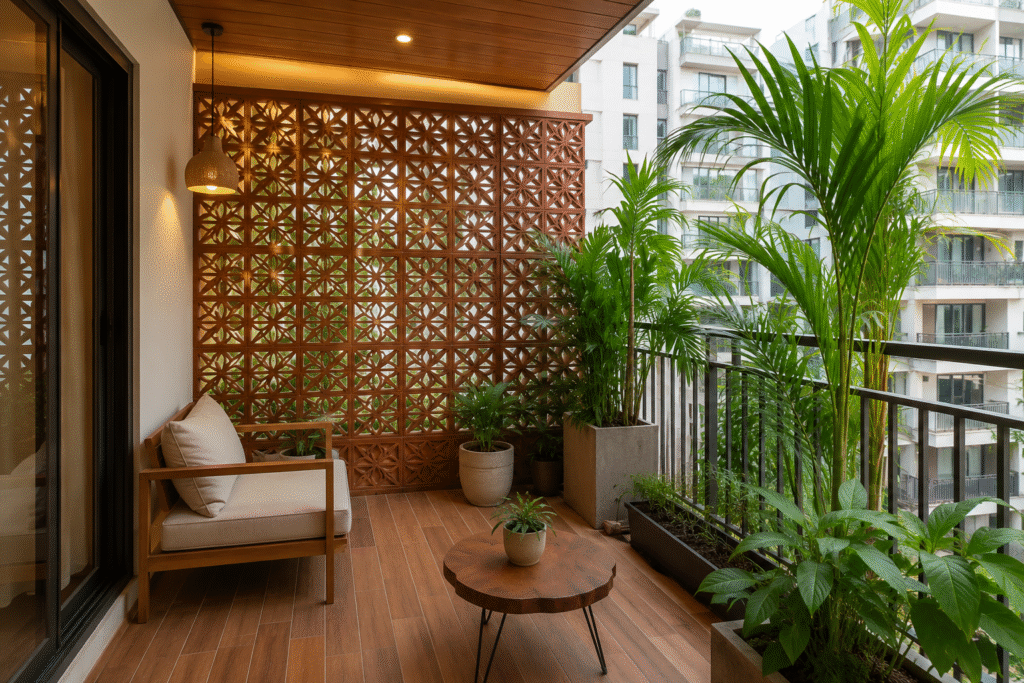
Design trends often change, but some materials never truly disappear. They simply return in a new form. Terracotta is one of those materials. Once commonly associated with traditional Indian homes, clay pots, roof tiles, and courtyards, terracotta is now finding a fresh place in contemporary outdoor spaces.
Today, Terracotta in Modern Balcony Design is becoming increasingly popular among homeowners who want warmth, character, and a natural feel in their outdoor areas. Modern apartments often feature concrete walls, glass railings, neutral colours, and sleek finishes. While these elements create a clean appearance, they can sometimes make balconies feel cold or impersonal.
Terracotta introduces texture and an earthy colour palette that immediately changes the atmosphere of a balcony. From decorative jali tiles and feature walls to planters and artistic elements, designers are finding creative ways to use this traditional material in modern homes.
But why is terracotta making such a strong comeback? Is it simply a design trend, or does it offer practical benefits for balconies? Let’s explore why homeowners and designers are rediscovering terracotta and how it can transform a modern balcony.
The Timeless Beauty of Terracotta
Terracotta has been used in architecture and decoration for centuries. The word itself refers to fired clay, a material known for its distinctive earthy shades ranging from soft orange and warm brown to deep reddish tones.
One of the main reasons for the growing popularity of Terracotta in Modern Balcony Design is its natural appearance.
Unlike highly polished or artificial surfaces, terracotta has subtle colour variations and texture. These small imperfections give the material character.
In a modern balcony filled with clean lines and neutral finishes, terracotta creates an interesting contrast. It can soften the appearance of concrete walls and complement materials such as wood, metal, glass, and greenery.
The warm colour also works beautifully with natural sunlight. During the morning and evening, terracotta surfaces can create a calm and welcoming outdoor atmosphere.
Why Modern Homes Need Natural Design Elements
Urban homes are becoming increasingly modern. Large apartment communities, high-rise buildings, and compact living spaces are common in cities such as Hyderabad.
Modern interiors often use:
- White and neutral colours
- Glass surfaces
- Metal elements
- Minimal furniture
- Clean architectural lines
While these styles are visually attractive, homeowners are also looking for ways to make their spaces feel more connected to nature.
This is where Terracotta in Modern Balcony Design becomes relevant.
Terracotta brings an organic visual element into an otherwise modern environment. When combined with plants, wooden decking, natural fabrics, and warm lighting, it can help create a more relaxed outdoor space.
A balcony does not need to look completely traditional to include terracotta. Even a small terracotta feature can add warmth to a contemporary design.
Terracotta Jali Is Changing Balcony Privacy Design
Privacy is one of the biggest concerns for apartment balcony owners.
Balconies may face neighbouring buildings, common areas, roads, or other apartments. Homeowners often want privacy but do not want to completely close their outdoor space.
Terracotta jali offers an interesting design solution.
Jali blocks feature decorative openings that create partial visual screening while allowing light and airflow to pass through. Their patterned appearance can also become a decorative feature.
The use of terracotta jali is one of the major reasons behind the popularity of Terracotta in Modern Balcony Design.
Depending on the pattern and installation, terracotta jali can help:
- Create partial privacy
- Define balcony zones
- Add visual texture
- Support natural airflow
- Filter some direct sunlight
- Create attractive light and shadow patterns
However, jali should not be considered a complete privacy or dust barrier. The level of screening depends on the pattern, opening size, and placement.
At Swarga Makeovers, balcony design elements such as terracotta jali can be planned according to the actual balcony layout, privacy needs, and overall design style.
A Perfect Match for Balcony Greenery
Terracotta and plants naturally work well together.
The warm earthy shades of terracotta create a beautiful background for green foliage. Whether you prefer a tropical balcony garden or a simple collection of low-maintenance plants, terracotta can visually enhance the greenery.
This combination is another reason why Terracotta in Modern Balcony Design is gaining attention.
Designers may use terracotta through:
- Jali walls
- Decorative tiles
- Planters
- Wall features
- Sculptural elements
- Small décor accents
When greenery is placed near terracotta surfaces, the contrast between warm orange tones and fresh green leaves creates a naturally attractive appearance.
For small balconies, a terracotta feature wall with carefully selected plants may be enough to create a strong visual transformation.
Terracotta Works with Modern Materials
A common misconception is that terracotta only suits traditional homes.
In reality, one of its biggest advantages is its ability to work with modern materials.
Terracotta in Modern Balcony Design can be paired with:
Wood and WPC
Wooden textures and terracotta create a warm, nature-inspired appearance. WPC decking can also provide a similar visual balance in outdoor spaces.
Black Metal
Black metal furniture, railings, or pergola structures create a modern contrast against warm terracotta shades.
Glass
Glass railings keep the balcony visually open, while terracotta elements add texture and character.
Artificial Grass
Green artificial grass can create a strong colour contrast with terracotta jali or decorative walls.
Neutral Walls
White, beige, cream, and light grey walls allow terracotta to become a focal design element.
The key is balance. Using too many terracotta elements may make a small balcony visually heavy. A thoughtfully planned feature can often create a stronger impact.
Terracotta Creates Beautiful Light and Shadow
One of the most visually interesting features of terracotta jali is the way it interacts with sunlight.
As natural light passes through the patterned openings, it creates changing shadows on balcony floors and walls.
The pattern may look different throughout the day as the sun moves.
This dynamic effect adds depth to Terracotta in Modern Balcony Design without requiring additional decorative accessories.
During the evening, warm lighting can also be positioned near terracotta jali to highlight its pattern and texture.
Simple wall lights or concealed lighting may create a soft and inviting atmosphere.
Lighting should always be suitable for outdoor use and installed with weather conditions in mind.
Terracotta Supports a Warm and Relaxing Atmosphere
Many homeowners want their balcony to feel different from the rest of their home.
The balcony may be used for:
- Morning coffee
- Reading
- Meditation
- Evening conversations
- Plant care
- Relaxation after work
Terracotta’s earthy appearance naturally suits these types of spaces.
The growing interest in Terracotta in Modern Balcony Design reflects a broader preference for warm, calming, and nature-inspired environments.
Instead of creating a balcony filled with bright artificial colours and excessive decoration, terracotta allows homeowners to use a more grounded colour palette.
Add a comfortable chair, a few plants, warm lighting, and simple flooring, and the balcony can become a peaceful extension of the home.
Is Terracotta Suitable for Hyderabad Balconies?
Hyderabad experiences strong sunlight, seasonal rain, dust, and changing outdoor conditions. Therefore, any material used on a balcony should be selected carefully.
Terracotta products can vary in quality, finish, thickness, and manufacturing method.
When planning Terracotta in Modern Balcony Design, homeowners should consider:
- Product quality
- Installation method
- Balcony exposure
- Water drainage
- Structural support
- Cleaning requirements
- Sealing requirements, where applicable
Not every terracotta product is suitable for every outdoor application.
Professional material selection and correct installation are important, particularly for jali walls and permanent decorative structures.
A design should consider both appearance and long-term maintenance.
Is Terracotta Easy to Maintain?
Maintenance is an important factor when selecting materials for outdoor spaces. Balconies are constantly exposed to dust, sunlight, rain, and changing weather conditions.
The maintenance requirements of Terracotta in Modern Balcony Design depend on the type of terracotta product and where it is installed.
Terracotta jali and decorative surfaces may collect dust because of their textured finish and patterned openings. Regular dusting with a soft brush or suitable cleaning tool can help maintain their appearance.
For deeper cleaning, methods should be selected according to the manufacturer’s recommendations and the specific terracotta product.
Avoid using harsh chemicals without checking whether they are suitable for the material. Some terracotta surfaces may also benefit from appropriate sealing depending on their application and exposure.
Correct installation and regular basic maintenance can help preserve the natural appearance of terracotta.
Terracotta and Sustainable Balcony Design
Homeowners are increasingly interested in natural-looking materials and environmentally conscious design choices.
Terracotta is traditionally made from clay and has a strong connection with natural architecture. This makes Terracotta in Modern Balcony Design visually suitable for nature-inspired outdoor spaces.
However, sustainability depends on several factors, including manufacturing processes, transportation, product lifespan, and installation.
Instead of choosing a material only because it is labelled natural, homeowners should consider product quality and durability.
A long-lasting balcony design that avoids frequent replacement can support a more thoughtful approach to material selection.
Terracotta can be combined with low-maintenance plants, energy-efficient lighting, and durable outdoor materials to create a balanced balcony design.
Terracotta Ideas for Small Apartment Balconies
You do not need a large terrace to use terracotta.
In fact, Terracotta in Modern Balcony Design can work beautifully in compact apartment balconies when used carefully.
Create a Small Jali Feature
Instead of covering an entire balcony wall, use terracotta jali on one selected section. This creates a focal point without making the balcony feel visually heavy.
Use Terracotta Planters
Terracotta planters are a simple way to introduce warm earthy tones. Combine different sizes while keeping the arrangement organized.
Add a Terracotta Wall Feature
A decorative terracotta tile panel can create visual interest behind a seating area.
Combine Terracotta with Vertical Greenery
Green plants placed near a terracotta surface create a natural colour contrast and help maximize visual impact.
Use Warm Lighting
Position suitable outdoor lighting to highlight the terracotta texture during the evening.
For small balconies, simplicity is important. One strong design feature often looks better than multiple competing elements.
Terracotta Jali vs WPC Privacy Screens
Both terracotta jali and WPC screens are commonly considered for balcony privacy and decorative applications.
The right choice depends on the design style and practical requirements of the balcony.
Terracotta Jali
Terracotta jali provides an earthy, textured appearance. Its decorative openings allow airflow and create attractive light patterns.
It is suitable for homeowners who prefer natural and warm design styles.
WPC Privacy Screens
WPC screens are available in different patterns and finishes. They can complement contemporary balcony designs and may offer different levels of visual screening depending on the selected pattern.
When comparing privacy solutions, consider:
- Required privacy level
- Balcony exposure
- Maintenance preference
- Overall home design
- Available installation space
- Desired airflow
At Swarga Makeovers, privacy elements can be selected based on the balcony’s actual layout rather than choosing a single material for every project.
Common Terracotta Balcony Design Mistakes
The popularity of Terracotta in Modern Balcony Design does not mean every terracotta installation automatically looks attractive.
Avoid these common mistakes:
Using Too Much Terracotta
Covering multiple walls, floors, and decorative areas with the same earthy shade can make a compact balcony feel heavy.
Use terracotta as a feature and balance it with neutral colours.
Ignoring Structural Requirements
Terracotta jali installations should be properly planned and securely installed. Permanent structures require suitable support and professional execution.
Choosing the Wrong Product
Not every terracotta tile or decorative product is designed for outdoor exposure.
Always check the intended application.
Poor Colour Coordination
Terracotta works beautifully with green, beige, white, grey, wood, and black metal. Too many bright colours may reduce its natural visual impact.
Blocking Drainage
Balcony design elements should never interfere with existing drainage points.
Ignoring Cleaning Access
Complex jali installations should still allow reasonable access for periodic cleaning.
Avoiding these mistakes can help Terracotta in Modern Balcony Design remain practical and visually balanced.
How to Style a Terracotta Balcony
Styling does not need to be complicated.
Start with terracotta as the main warm design element. Then add materials and colours that complement its natural appearance.
A simple design combination may include:
- Terracotta jali
- Wooden or WPC decking
- Green plants
- Black metal furniture
- Beige outdoor cushions
- Warm lighting
For a more minimal balcony, combine a terracotta feature wall with one comfortable chair, a compact side table, and a few large plants.
The goal is to allow the terracotta texture to remain visible.
Avoid placing too many decorative items directly in front of a beautiful jali installation.
Why Terracotta Works for Indian Homes
Terracotta has a familiar connection with Indian architecture. From traditional courtyards to clay roof tiles and decorative screens, the material has been used in different forms for generations.
Today, Terracotta in Modern Balcony Design brings that familiar warmth into contemporary apartments.
The material can create a bridge between traditional design inspiration and modern living.
A terracotta jali wall paired with contemporary furniture can feel modern without losing its natural character.
This balance is particularly attractive for homeowners who want their balcony to feel unique rather than looking like a generic outdoor space copied from a catalogue.
Create a Balcony That Feels Personal
The best balcony designs reflect the homeowner’s lifestyle.
Some people want a quiet reading space. Others want a balcony garden, a family seating area, or a beautiful background for evening conversations.
Terracotta in Modern Balcony Design can be adapted to different requirements.
For example, a plant lover may combine terracotta jali with vertical greenery. Someone who prefers minimal design may use a simple terracotta wall feature with modern furniture.
The material should support the overall balcony concept rather than becoming a decorative element added without planning.
A personalized design is often more enjoyable and functional in the long term.
Why Choose Swarga Makeovers for Terracotta Balcony Design?
Designing a balcony with terracotta requires careful planning. The pattern, placement, surrounding materials, lighting, and greenery should work together to create a balanced outdoor space.
At Swarga Makeovers, balcony designs are customized according to the available space, homeowner preferences, and practical requirements. The focus is not simply on adding decorative elements but on creating functional outdoor areas that homeowners can enjoy every day.
When using Terracotta in Modern Balcony Design, the team considers privacy requirements, natural airflow, sunlight, balcony layout, and overall design style.
Balcony makeover solutions may include:
- Terracotta jali installations
- Balcony privacy solutions
- Wooden and WPC decking
- Artificial grass
- Vertical garden designs
- Pergola structures
- Outdoor seating
- Balcony lighting
- Customized balcony layouts
- Complete terrace makeovers
A carefully planned combination of materials can transform an ordinary balcony into a comfortable and visually distinctive outdoor space.
Think About Long-Term Balcony Design
Design trends can change quickly. A colour, furniture style, or decorative element that is popular today may look outdated after a few years.
Natural materials and earthy colour palettes often have a more timeless visual appeal.
This is another reason homeowners are interested in Terracotta in Modern Balcony Design.
Instead of designing a balcony only for social media photographs, consider how the space will function over time.
Ask yourself:
- Is the material suitable for outdoor conditions?
- How easy is it to clean?
- Does the design match my home?
- Will I actually use the balcony?
- Is the seating comfortable?
- Can damaged components be repaired or replaced?
A practical design can remain enjoyable long after a temporary trend disappears.
Combine Terracotta with the Right Greenery
Plants play an important role in enhancing terracotta balcony designs.
Green foliage naturally contrasts with the warm orange and reddish shades of terracotta.
For a low-maintenance balcony, consider plants based on the available sunlight and local growing conditions.
Depending on the balcony environment, options may include snake plants, money plants, jade plants, palms, or suitable succulents.
Avoid selecting plants only based on appearance. Consider watering requirements, sunlight, wind exposure, and available maintenance time.
When planning Terracotta in Modern Balcony Design, greenery should complement the architecture rather than hide the terracotta feature completely.
A few strategically placed plants can often create a stronger visual impact than an overcrowded balcony garden.
Use Lighting to Highlight Terracotta Features
Terracotta can look especially attractive during the evening when lighting is planned correctly.
Warm outdoor lighting can highlight the texture and pattern of jali tiles.
Wall lights, concealed LED lighting, or carefully positioned spotlights may help create a relaxing atmosphere.
For balconies with terracotta jali, light passing through the patterned openings can create interesting shadows.
The lighting design should remain simple and functional.
Always choose fixtures suitable for outdoor conditions and ensure electrical installation is handled safely.
Lighting can help Terracotta in Modern Balcony Design remain visually attractive even after sunset.
Is Terracotta Just a Temporary Trend?
Terracotta may currently be receiving renewed attention in modern design, but the material itself is far from new.
Its long history in architecture demonstrates its enduring visual appeal.
What has changed is the way designers use it.
Instead of limiting terracotta to traditional roof tiles or clay pots, modern balcony designs are incorporating jali panels, feature walls, decorative tiles, and contemporary installations.
The renewed popularity of Terracotta in Modern Balcony Design reflects homeowners’ growing interest in warm, textured, and nature-inspired spaces.
While design trends will continue to evolve, terracotta’s earthy character gives it the flexibility to work with both traditional and contemporary styles.
Conclusion
Terracotta is making a strong return to modern balcony design because it offers something many contemporary spaces are missing—warmth, texture, and natural character.
Modern apartments often feature concrete, glass, and neutral finishes. Introducing terracotta can soften these surfaces and create a more inviting outdoor atmosphere.
From decorative jali screens and feature walls to planters and artistic details, Terracotta in Modern Balcony Design can be adapted to balconies of different sizes and styles.
Terracotta jali can support airflow, create partial privacy, and produce beautiful patterns of light and shadow. When combined with greenery, wooden textures, modern furniture, and warm lighting, it can become a striking balcony feature.
However, good design requires balance.
Homeowners should select suitable terracotta products, consider outdoor exposure, plan proper installation, and think about long-term maintenance.
The goal should not be to add terracotta simply because it is trending. Instead, use it thoughtfully to create an outdoor space that reflects your lifestyle and complements your home.
A well-designed balcony can become a peaceful extension of your living space—a place to relax, enjoy greenery, and spend meaningful time at home.
Transform Your Balcony with Swarga Makeovers
Looking for a customized balcony makeover in Hyderabad?
Swarga Makeovers creates functional and stylish outdoor spaces using thoughtful layouts, terracotta jali, decking, greenery, pergolas, privacy solutions, and customized seating.
Whether you want a modern balcony, a nature-inspired retreat, or a terracotta feature design, every makeover is planned according to your space and requirements.
📞 Call / WhatsApp: +91 9885701188
🌐 Website: swargamakeovers.com
Contact Swarga Makeovers and explore creative ideas to transform your balcony or terrace into a space you’ll enjoy every day.
Frequently Asked Questions
1. Is terracotta good for modern balcony design?
Yes. Terracotta can complement modern balconies by adding warm colours, texture, and natural character. It works well with glass, wood, WPC, metal, and greenery.
2. Can terracotta jali provide balcony privacy?
Terracotta jali can provide partial visual privacy depending on the pattern and placement. Its openings also allow airflow and natural light to pass through.
3. Is Terracotta in Modern Balcony Design difficult to maintain?
Maintenance depends on the terracotta product and installation. Regular dusting and suitable cleaning can help maintain its appearance. Some applications may require appropriate sealing.
4. What colours work well with terracotta balconies?
White, beige, cream, grey, green, natural wood tones, and black metal generally complement terracotta’s warm earthy shades.
5. Can terracotta be used on small apartment balconies?
Yes. Small balconies can use terracotta through a compact jali feature, decorative wall section, or selected planters. Using it as a focal element can prevent the space from feeling overcrowded.